
What is the best Latin dictionary, and how to find out if you need one

Updated: Apr 20
The myth of the best Latin dictionary
The one question I get asked at least once a week is: What is the best Latin dictionary? Many will argue that there is no such thing as a 'best Latin dictionary'. However, depending on the student's level, the answer can be quite straightforward.
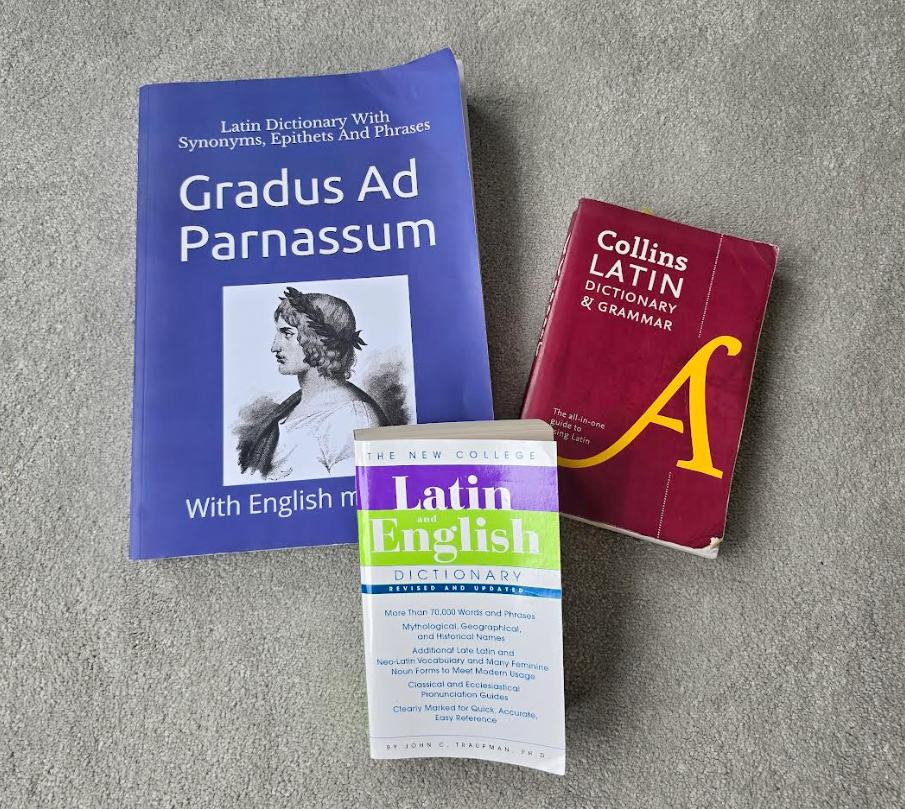
The most important thing to bear in mind is that if you use a dictionary that is above your level of Latin, confusion is guaranteed: more forms than you can understand, meanings that will not appear in the exams you are sitting, and potentially an overwhelming sense of frustration.
Having said that, a dictionary is a thing of beauty, and I will not blame you for stacking your shelves with fine examples. Just, please, do not use them for specific high-stakes exams before you hit A-Level!
So, having issued this warning, let us see what this looks like in practice:
Students preparing for Common Entrance Latin at 13+
Very straightforward: at first, use the back of whatever coursebook your class is using; they all have one. This will include the principal parts you need, in the forms you need them, and only the meanings that will be helpful at this point.
Once you are approaching your exam, you can then print out the Level 1, Level 2, Level 3 or Scholarship list and work from there.
Students in KS3
Again, this one is rather straightforward: at first, use the back of whatever coursebook your class is using; all books have one. Yes, look again! There it is, right next to the grammar summaries.
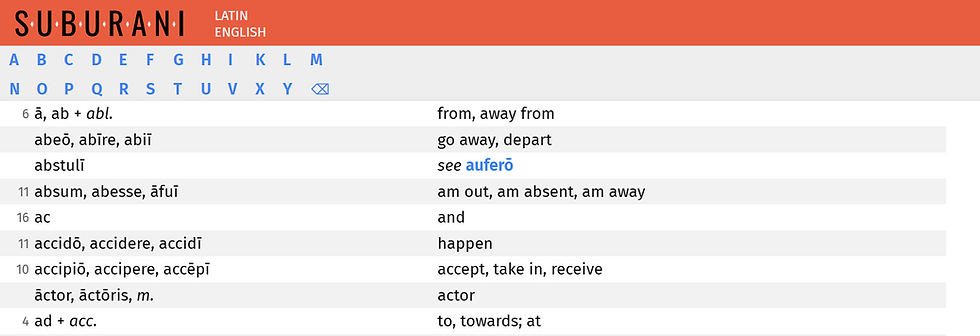
I recommend using the back of the book because making it a conscious effort to find the word helps with retention, but you can also use the online versions. Note how they are targetted to your needs and, in the case of the CLC, it even links to the forms in a table:

Students preparing for OCR and EDUQAS GCSE Latin
This is a moment of transition. You will start with the back of whatever course you are using and continue with this until you get to exam practice. At this point, I recommend printing the vocabulary lists from OCR or EDUQAS and working from there.
The beauty is that you can print it as it best suits you if you use the Microsoft Excel sheet, and focus on different sections, parts of speech, etc.

Your GCSE Latin defined vocabulary list does not need to be a pristine document: write on it, highlight it, and make sure you make a note of the words that you keep having to search: learn them as soon as possible.
This post contains affiliate links, which help me keep producing free resources at no extra cost to you. As an Amazon Associate, I earn from qualifying purchases, but I only ever recommend products that I use and believe are worthwhile.
A-Level Latin students
At A-Level Latin, you need to start thinking more thoroughly about what dictionary you are going to use, and I always make sure my A-Level students have a clear idea of what dictionary to use at different points in the Latin learning journey.
As an aside, if you need support for your A-Level revision, my Latin A-Level Mastery Hub is currently taking in students.
My suggested itinerary for vocabulary list and dictionary use at A-Level:
AS year: Latin vocabulary list
Initially, use the back of the book (yes, both Suburani 3 and Latin Beyond GCSE have a handy dictionary at the back) as well as the OCR-defined vocabulary list.
A2 Latin vocabulary list
There is no vocabulary list for A-level: as soon as you start working with more complex texts and preparing for your second year exam, you need to start using external dictionaries and understanding how they work.
I always spend quality time with my students getting them to understand how to use a dictionary. But if you need additional support, using an online tool like LatDict can use.
I recommend LatDict because it autofills suggestions, so you have a clearer idea of families of words or easily confused ones, plus you can look by irregular parts, such as the perfect or the supine.

But Latdict has a big drawback: no macrons. For macrons, you want to use some point, you will want to transition to more detailed dictionaries, particularly so that you can see the macrons, more on this below.
At A2, ideally you should own and know how to use a paper dictionary. Here are my 2 suggestions, which I believe cover the needs well and are accessible:
Best dictionary for detail: The New College Latin and English Dictionary
It has macrons, a good amount of translation options and uses and words well to understand principal parts. It does not have a grammar section, but you really do not need one.
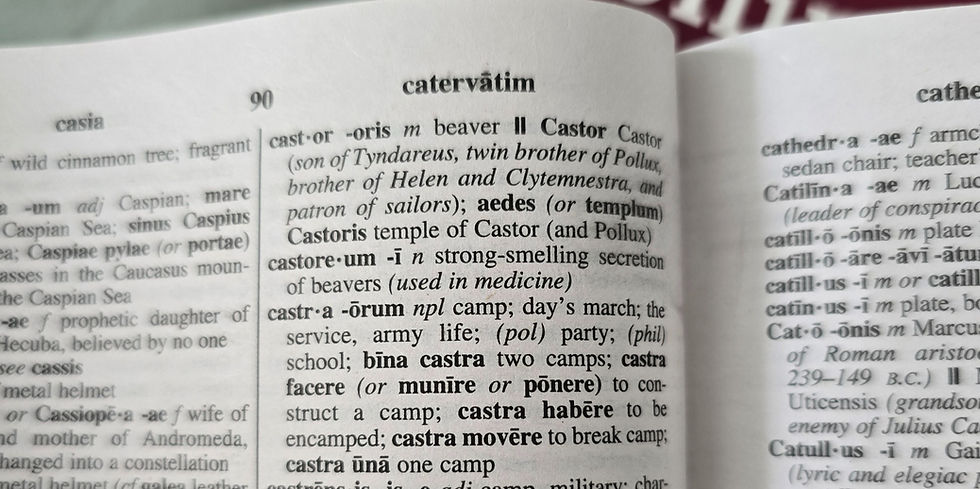
Best dictionary for speed: Collins Latin Dictionary and Grammar
This dictionary is succint, easy to use, contains macrons and is uncomplicated. It also comes with a grammar at the back, which is useful if you are learning from Latin Beyond GCSE, which does not macronise the words (eheu!).

Back to online dictionaries, the ones with macrons often have too much information. If you need to use a macronised online dictionary, I suggest the Elementary Latin Dictionary by Lewis and Charlton. It is succinct but comes with handy examples:

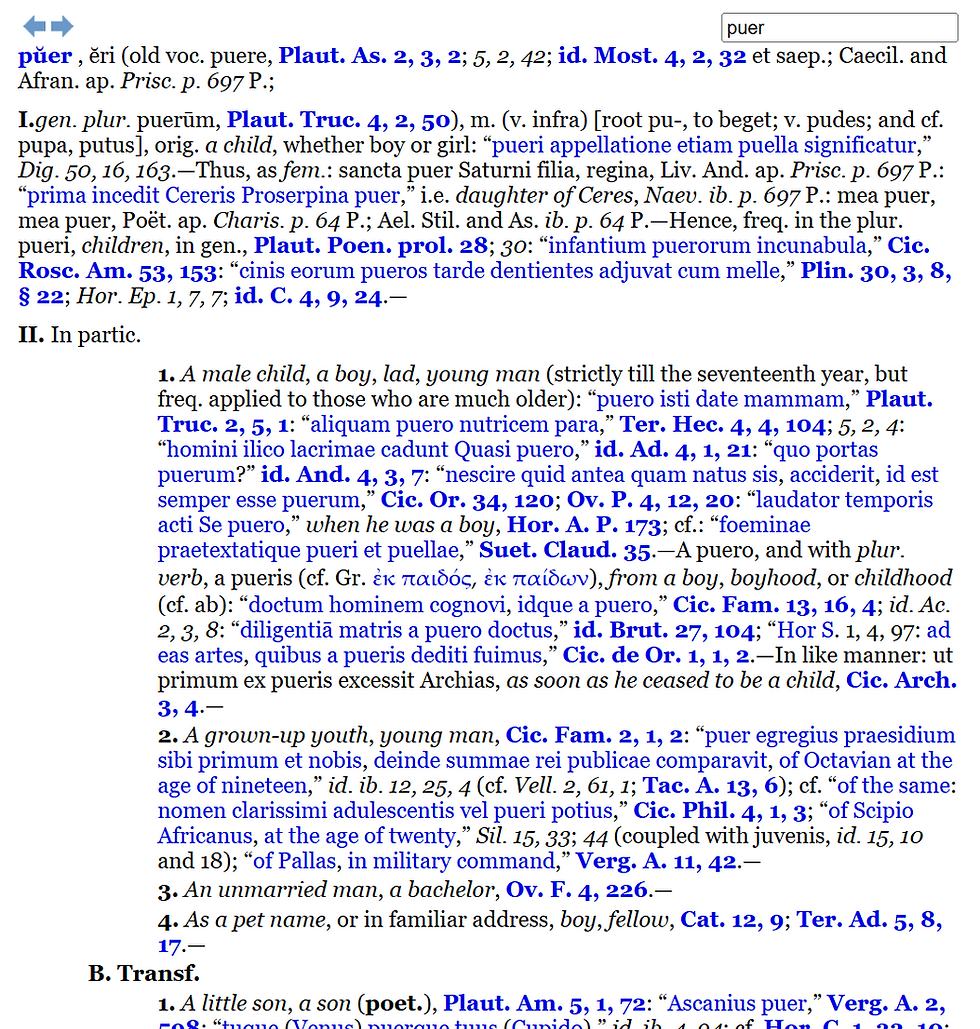
Lewis and Short is a fabulous dictionary, but I would not recommend it for A-Level students, as you can get lost in the detail:
Is it better to use a paper dictionary or an online one when translating Latin?
The short answer is yes, and not only because at my age I can be old school sometimes: you are keeping the words in mind as you are searching, concentrating on the exact form and seeing related words as you search, which is critical for long-term acquisition.
What about English to Latin dictionaries?
The information above applies equally to English to Latin, but remember that for exams there is generally a restricted vocabulary list that applies for English to Latin only.
In any case, it is most useful to be able to translate in both directions. You can check my blog post where I talk about how to learn vocabulary.


Comments